About Me

My photo
Tea-drinking introvert found either behind a book or within arm's reach of one. Book reviewer, and book sniffer. You may have seen me on W24, BooksLive, Aerodrome, Bark Magazine, CultNoise Magazine, or Expound Magazine.
Showing posts with label science. Show all posts

26 Sept 2023

Review: Field Guide To The Spiders Of South Africa by Ansie Dippenaar-Schoeman

Rating: Buy it ASAP – a bookshelf essential

What is it? Reference (field guide)

Ideal for fans of: A Complete Guide to the Snakes of Southern Africa, by Johan Marais

What makes it special? It demystifies and de-scarifies spiders 

Get it in South Africa from: Struik Nature (Penguin Random House South Africa)


We all know someone who will scream, cry or exclaim loudly when faced with spiders. Often, it's followed by the "ewwwwww, spiders!" dance, complete with nose crinkling and head shaking. 

But not any more.

Ansie Dippenaar-Schoeman and Struik Nature are changing all that. Field Guide To The Spiders Of South Africa will actually make you fall in love with spiders. 

First, you'll start with identification. This guide features a mind-boggling 780 different species of spiders which are all home to the south of sunny South Africa. Once you've identified your new eight-legged friend, you can learn everything about it. And I mean everything. 

  • Spider morphology, habitats, mating, common geographic locations, and whether or not they're endangered
  • Info on webs - their shapes, how they're built, and why spider silk is freaking amazing 
  • How to capture them safely 
  • As a bonus, there's also an entire section dedicated to venom (and most importantly, how to treat any bites you might get). 

Of course, all of this information is accompanied by stunning photographs and illustrations that allow you to see all distinguishing features. Moreover, it's vital to add this; the spiders have been styled to look kinda cute. I mean it - this isn't a book of horrors featuring fangs and legs and things being killed in webs. Instead, it's an attempt to make these many-legged friends less intimidating. 

And that's so important, because spiders have several really important roles in nature, too. And you'll discover what those are when you read through this guide (no spoilers here!).

So even if you think you're afraid of spiders, this is a book to consider getting. Not least because you could learn how to avoid them, but because it opens up a whole new world for nature lovers. 

So go on, go on a walk and discover some spiders. Just take your Field Guide To The Spiders Of South Africa with you. 

Field Guide To The Spiders Of South Africa by Ansie Dippenaar-Schoeman is published by Struik Nature, an imprint of Penguin Random House South Africa.

17 Apr 2023

Review: How To Calm Your Mind By Chris Bailey


Rating
: Buy it ASAP – a bookshelf essential

What is it? Self help, backed by science

Ideal for fans of: New Scientist and Ed Yong

What makes it special? It offers solutions to the problems it presents 

Get it in South Africa from: Pan Macmillan South Africa


Have you ever looked at a book and just known that it was written specifically for you? That’s exactly how I felt when I spied Chris Bailey’s How To Calm Your Mind. TED (of TEDTalks) described Bailey as ‘The most productive man you’ll ever hope to meet.’ Literally – it’s on the cover. And yet there was a scoffing voice in my head that said ‘Pah, I bet I could rival him for that title.’

You see, I am addicted to busyness. To productivity. To getting things done. For years, I’ve had people asking me ‘how do you do it all? Where do you get the energy? How are you so disciplined?’. Well, dear reader, it turns out I’m just addicted to getting ish done.

And that may look very cool from an outsider’s perspective, but shall I let you in on a secret that Bailey is also desperately trying to share? It’s not necessarily a good thing. Because if, like me, you can’t switch off, you’re heading for burnout and disaster.

But enough about me. If you felt like you could see yourself in my waffling above, you need to read this book. If you’ve ever wondered why you’re so anxious no matter what you try to counteract it, you need to read this book. If you want to find out why you have that constant niggling feeling of something missing, of guilt, of needing to do something, you need to read this book.

Screw it, let me be more clear. Everyone needs to read this book.

Bailey has presented a thoroughly well-researched, humorous and easy to read book that really will improve your life.

First, he starts by defining stress or anxiety, and defining calm. Then he shows how our constant need to be doing more and getting more (and thus our dopamine addiction) is really not leading to fulfilment – it’s leading to burnout.

However, the true value of How To Calm Your Mind is not just Bailey’s extensive definitions and examples – it’s the fact that he lists several useful tools and tricks that will allow the reader to actively shift from anxiety to calm – although the trip certainly won’t be easy.

Of course, you’ll need to get a copy of the book to see these tips, but I can guarantee you they are worth it. I’ve already started following some of Bailey’s advice, and honestly, I can see a difference in my stress levels already. So why not do the same?

To read Bailey is to learn how to change your life for the better, so go on and do it.

How To Calm Your Mind By Chris Bailey is published by Macmillan, an imprint of Pan Macmillan.


28 Jan 2022

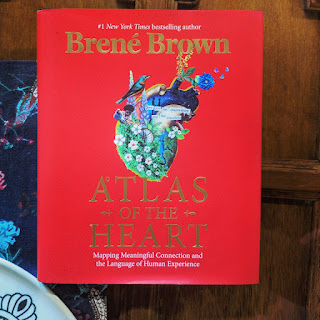
Review: Atlas of the Heart by Brené Brown


Rating: 4 Stars

Genre: Popular science, self-help

Themes: Emotions and how to use them to communicate

Ideal for fans of: Rhonda Byrne, Oprah

Get it in South Africa from: Penguin Random House South Africa

Atlas of the Heart is a compendium of 87 emotions and experiences – that means 87 different emotions and the thoughts that lead to them. They’re conveniently grouped by similarity of the feelings, and the responses they evoke.


Brené Brown is uniquely qualified to write about emotions – she’s had a lifelong interest in how these feelings effect our lives, and specially, how they change the way we communicate. Her interest eventually became a passion, and then a career. And it all started with some fascinating research on one of the world’s most complex emotions – shame. Despite this, Brown freely admits that she doesn’t have concrete answers to every question concerning emotions, but she does have a lot of data, and the help of fellow researchers.

Her conclusions are remarkable. Not only does she define every emotion and experience covered in this tome, but she gives the reader incredible information that leads to several “ah ha!” moments, starting from her assertion that a lot of what we think of as emotion is actually just cognitive responses – emotion is as much about thinking as it is a bout feeling.

But that’s not all.

Brown helps us distinguish between similar emotions (like envy and jealousy) because if you better understand what you’re feeling and why, you can talk about it, form meaningful connections, and learn from it. You can master your emotions.

This book is packed with astonishing insights, including how boredom is actually good for you, and that disappointment CAN be measured. But don’t feel overwhelmed – all the research and data is presented in easy to follow and easier to digest bite-sized chunks. Brown’s style is also refreshingly personal – she gives context to her research, but shares this with an honest how-to style, that feels more like you’re getting advice from a friend than getting cold hard science.

There’s more. You’ll also get three skillsets for using emotion to cultivate meaningful connection with other people – so you can take what you’ve learned, and actually apply it to make your life better. What more could you want?

Atlas of the Heart by Brené Brown is published by Penguin Random House

14 Dec 2020

Review: The Doors of Eden by Adrian Tchaikovsky

Four years ago, Lee’s life changed forever. While on a monster hunt with her best friend and better half, Mal, the two girls are separated, and Mal disappears without a trace. Over the years, Lee has tried to maintain her sanity while searching for Mal, despite never having a trace of evidence. Until suddenly, Mal returns, amid an unusual break in at a scientist’s home, and she has some strange company. For four years, Mal has been skipping across space and time with a decidedly unhuman posse. And she has bad news.

Elsewhere, Julian Sabreur of MI5 is dealing with a national threat to security, as a top government scientist has been attacked, and losing her isn’t an option. Yet when he tries to make sense of the attack, he finds only strange leads that lead him directly to Lee and Mal, and their otherworldly company.

There’s very little to fault about this book. There’s something about a carefully written story that believably warps our sense of space and time that I can’t resist, and The Doors of Eden is not only a contender in this genre, but a heavyweight. Literally.

But don’t be intimidated by the size of this tome. The prose is so elegant, and the writing so snappy, that you soon forget you’re making your way through a 597-page monster. As the story unfolds, the pain in your wrists will be replaced with joy – at a truly mesmerizing story, and a serious FOMO for earths that never were.

Tchaikovsky has a unique talent: he writes science fiction that reads like real science. Between each chapter of this book, there’s a clever trick – a chapter from a biology text that not only gives weight to the strange creations that have sprouted from the writer’s imagination, but manages to make all these seemingly outlandish theories not just possible, but believable. By the final chapter of The Doors of Eden, you’ll have been so cleverly primed to believe in the extraordinary, that you’ll no longer notice that faint line between reality and fiction – it’s abolished, by sheer good writing and epic story-telling. That kind of magic alone is what makes The Doors of Eden worth reading – it’s as much an experience as it is a journey through space and time.

The Doors of Eden by Adrian Tchaikovsky is published by Tor Books, a Pan Macmillan company. 

19 Jan 2020

Review: Letters from an Astrophysicist by Neil deGrasse Tyson


Letters from an Astrophysicist is a book containing just that – a choice collection of communication between Neil deGrasse Tyson and the world at large. From letters spanning over a decade, and encompassing everything from fan mail to hate mail, this book gives a rare glance into not just the mind, but the pen, of a famous scientist. Through his exchanges, we discover that this man of science is also one of humour, humanity, and family – he grapples with a range of concepts from parenting and race, to religion and the supernatural, all from the viewpoint of science, but with the zeal and passion of a fired-up writer or singer. (Truly, the book even includes a mic drop moment). Is Tyson a science Rockstar? Who knows, but he’s certainly in the running.

From the first sentence of this book, three things are apparent: 1. Neil deGrasse Tyson may be a scientist, but he writes like a poet. 2. This man knows his shit. 3. His enviable intellect spans far beyond just astrophysics; among others, he’s got psychology and anthropology under the belt, too.
Generally, intellects of Tyson’s stature – and specifically in his field of expertise – are stereotyped as bespectacled, socially inept number-crunchers with the emotional depth of a robotic caricature. It is therefore refreshing to read the scribblings of someone who can not only string together a series of words in a pleasing manner, but reach beyond the words to the human experiences which instigated the many letter contained within this volume.

Opening with a moving and melancholy reflection of an older America, in which achievements were limited according to race and gender, Tyson’s position as a celebrity scientist attests to hard work, determination, passion, and above all, curiosity, that cannot but make for an excellent story. With his reflections into the psyche and ethos of modern society, he comes across as a somewhat scientific Dalai Lama, but with a sparkling personality and cheekiness that also mellows any awe. Indeed, that wit takes him to new levels of sarcasm and verbal sparring with those inclined to believe in religious fanaticism or the supernatural – at which point he becomes more like Neil deSass Tyson, and who doesn’t love a bit of shade?

Overall, it’s easy to see why Tyson has such a huge fanbase and why he is so popular. He’s personable, smart, and impressive. Despite this, the nature of the majority of the letters contained within this book is perplexing; one would understand questions and commentary regarding science and its opponents, but of life advice, existentialism and melancholy reflection? That’s the part of the book I found most jarring. However, Tyson responds to these unscientific deliveries with admiration and class, so I see the appeal. In addition (and as is emphasized through several letters mentioned), Tyson has an ease of manner with regards communication – he gets his point across effectively and concisely, making him an excellent educator. Seriously; just some of the things I learned: Eyewitness testimony is not scientific evidence (I cannot emphasize this enough, and nor, apparently, can Tyson); the myriad ways in which science affects and improves our daily lives is startling and impressive; Armageddon was a scientific failure of the film industry; and mankind has so much to learn.

Letters from an Astrophysicist by Neil deGrasse Tyson is published by WH Allen, an imprint of Ebury Publishing, a Penguin Random House company.

23 Jan 2018

Review: How to be Human by New Scientist

How to be Human is officially the ultimate learning experience. Think textbook, but you’ll actually want to read it. Mind-blowing is perhaps the easiest way to describe the adventure that is this book. The sheer level of expertise, evident through the meticulous research and many contributing writers (each specialists in their field) make it sexy. New Scientist has done a great job of compiling their best articles on human nature, biology and society into a single, beautiful collection.

Learning has never looked this good, seriously. Each chapter features articles concerning a wide range of topics from why our minds wonder, to the pheromones that make us attractive to others, the reason we form habits, and why we show emotions. Ever wondered why we cry, dream, lie or show empathy? Read this and find out. Similarly, prepare to discover the working behind introverts and extroverts, and the subtle differences in brain mechanics and chemistry between the genders. Basically, human beings are extraordinarily complex beings riddled with mysteries. Yet this book exposes myths about society, explains social aspects you’ve always wondered about, and expertly makes sense of previously unknown and oft-pondered questions of what makes us us. For every random question you’ve ever wondered about your brain and body – including those deep shower thoughts – here is an answer.

Mesmerizing facts and information aside, the style of the writing in How to be Human is equally attractive. Filled with witty banter and sly humour, the writers certainly make facts fun.

Go on, learn something, demystify your life, and impress (or annoy, there’s a thin line) others with a myriad facts about why and how we do what we do.


How to be Human by New Scientist is published by Hachette Books, and is available in South Africa from Jonathan Ball Publishers.