About Me

My photo
Tea-drinking introvert found either behind a book or within arm's reach of one. Book reviewer, and book sniffer. You may have seen me on W24, BooksLive, Aerodrome, Bark Magazine, CultNoise Magazine, or Expound Magazine.

25 Oct 2022

Review: Vetplant Fairies, by Fiona Moodie, Ingrid de Kok and Antjie Krog

Rating: Buy it ASAP – a bookshelf essential

What is it? Illustrated, children’s poetry

Ideal for fans of: Fynbos Fairies (Antjie Krog and Fiona Moodie)

What makes it special? Gorgeous illustrations and adorable prose; also available in Afrikaans

Get it in South Africa from: Umuzi, an imprint of Penguin Random House South Africa

What do you get when you combine two South African literary legends with an illustrator extraordinaire? A visual treat that’s not just for children! Yes, Vetplant (succulent) Fairies might be marketed as a children’s book, but let’s be honest. Plant lovers everywhere will be dying to get their hands on this little volume, too.

Vetplant Fairies isn’t just attractive because it’s the work of a few powerhouse South African literary figures. Of course, the writers and illustrators share a huge amount of accolades, including literary awards, art exhibitions across the globe, and more books than you can count. But this title is special. It comes at a time when South Africans acknowledge the importance, freedom and sheer beauty of the outdoors. 

After a global pandemic that had us holed up inside for months, this call to nature is a breath of fresh air. So why not take Vetplant Fairies on your next great adventure, and see if you can spot all the books' residents. 

This book features fifteen of Southern Africa’s best-known succulents. Euphorbia, lithops, aloe, hoodia and crassula all feature! Accompanying a full-page, full-colour illustration of each plant (with accompanying wildlife and fairies) is a carefully penned poem. Some are whimsical, some sad, but all of them are ideal for read-alongs with little ones.

Aside from the pictures and text, this book also serves to educate young and old readers about some of the region’s most beautiful (and occasionally scarce) plants. It’s a visual diary of a few of natures biggest delights, and it is timeless.

Now if you’ll excuse me, I need to see about having some of these images copied and framed. They’re that impressive.

Vetplant Fairies, by Fiona Moodie, Ingrid de Kok and Antjie Krog is published by Umuzi, an imprint of Penguin Random House South Africa.

16 Sept 2022

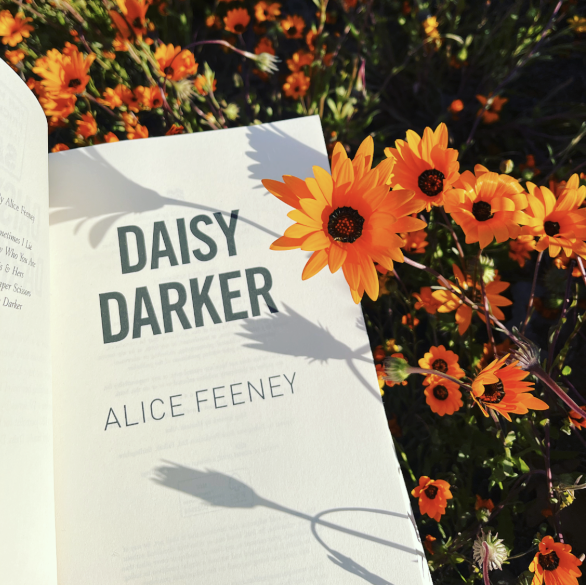
Review: Daisy Darker, by Alice Feeney

Rating: Buy it ASAP – a bookshelf essential

What is it? Fiction, mystery/drama

Ideal for fans of: The Guest List (Lucy Foley) or Sleep (CL Taylor)

What makes it special? Exceptional prose and a triple twist

Get it in South Africa from: Pan Macmillan South Africa


Daisy Darker died eight times by her thirteenth birthday. Then again, she was only given fifteen years to live thanks to a congenital heart defect. Daisy suspects this is the reason she is her mother’s least favourite child. Because she was born damaged, into an already breaking family.

But that’s all behind her now. Daisy is preparing for a family reunion. To celebrate her nana’s 80th birthday bash, the whole family will meet at Seaglass; a ramshackle old house isolated on a tiny island. And Daisy has a secret. Yet while her family is stuck together until the tide goes out, they’re not alone. They’re trapped with a killer.

Daisy Darker can be summed up in a single word: delicious. The writing is superb, with a nod to high-brow literature, yet accessible. Daisy Darker reads so easily it feels like you’re inhaling the story. And what a story it is! We’re slowly guided back through the Darker family’s murky past, until it becomes clear that Daisy isn’t the only one who’s hiding something. Each trip back adds to the present narrative and helps build tension as we count down the hours until the tide is out.

Feeney ends of this masterpiece with a satisfying grand reveal that includes not one, or two, but THREE twists. So yes, you might be able to correctly navigate the red herrings and guess the killer correctly. But I guarantee that you will not predict the unique outcome. And that’s reason enough to try Alice Feeney. She’s put a modern spin on a well-known genre, and made it new again. Moreover, her writing is vibrant, explosive and dramatic, and this makes for the perfect literary getaway.

Daisy Darker by Alice Feeney is published by Macmillan, an imprint of Pan Macmillan, and can be sourced from Pan Macmillan South Africa.

6 Sept 2022

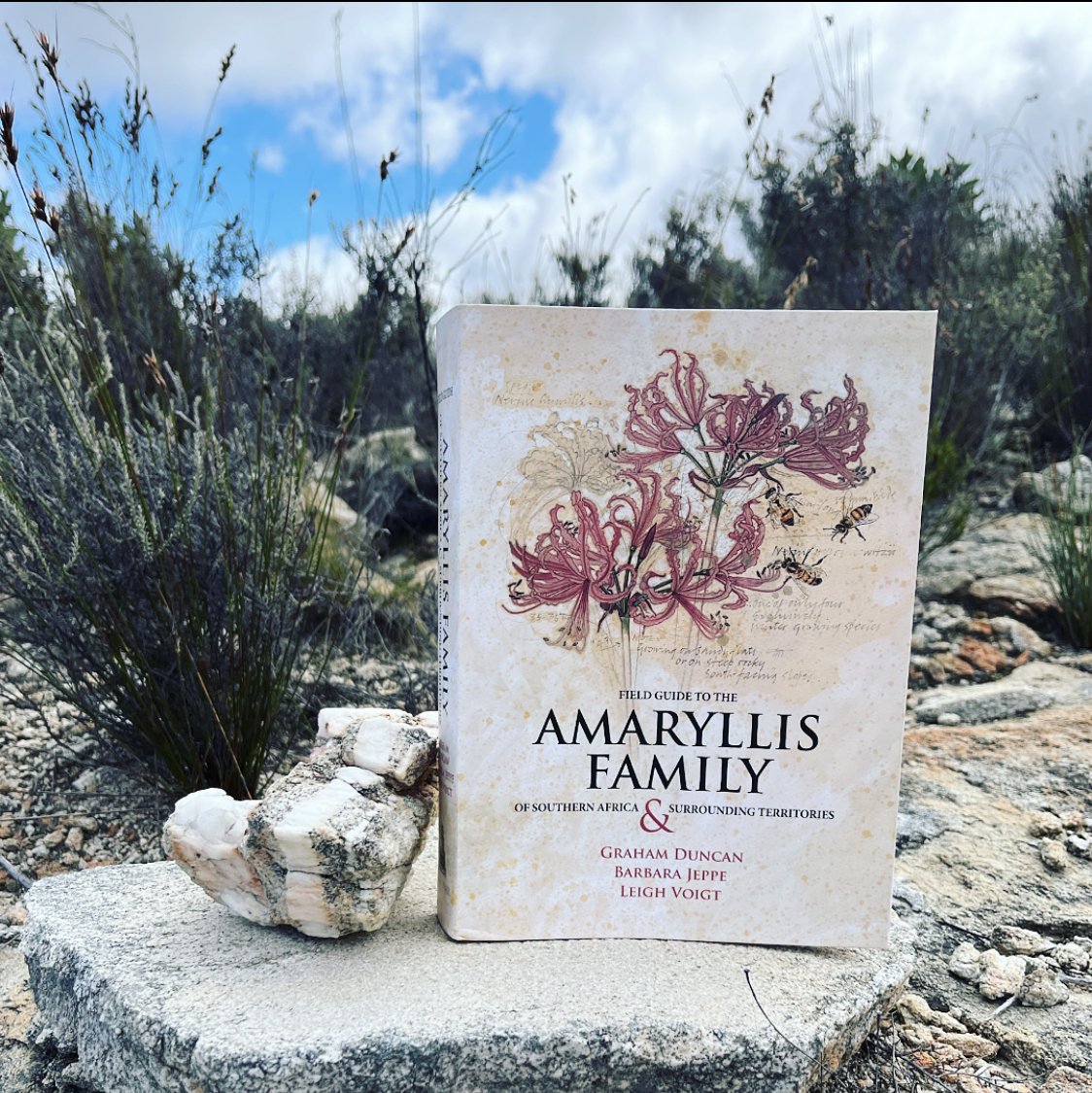
Review: Field Guide to the Amaryllis Family by Graham Duncan, Barbara Jeppe and Leigh Voigt

Rating: Buy it ASAP – a bookshelf essential

What is it? Non-fiction, field guide

Ideal for: Plant lovers and amateur botanists

What makes it special? The content is organised by biome, with full-colour illustrations

Get it in from: Penguin Random House South Africa (Struik Nature). Otherwise, check out the Botanical Society of South Africa (or your local botanical garden).

___________________________________________________________________________________

The Amaryllis family is made up of a whopping 18 genera, comprising 265 species located mostly in Southern Africa. And this book covers all of them. 

Amateur botanists, hikers and nature enthusiasts alike will no longer have to guess exactly which Amaryllis plant they’re looking at.

The Field Guide to the Amaryllis Family is the bible for all-things Amaryllis. Comprehensive is an understatement.

It’s detailed and fully illustrated – including drawings and photographs of the underground structures (which is hopefully only for the event that you stumble across an uprooted bulb. Please don’t dig up Amaryllis willy nilly! I beg you!)

Each entry includes where a plant is found, look-alikes, and its life cycle. That way, you’ll know when to look out for flowers, seeds, or good ol’ fashioned greenery. It also features the history and medicinal properties of each species.

Finding a plant is easy, as they’re organised by biome. If you don’t know what that is, no problem. The authors have included a section explaining what these are and how they differ. 

This means that depending on which region you’re located in – and there are maps to help you work it out – you can narrow down searches, making identification user friendly.

[I feel like this is a good point to repeat: there are 265 different species of this plant. That creates a lot of potential for misidentification.]

As an aside, this is exactly how I discovered that I live on the cusp of two biomes; fynbos and succulent karoo (the authors are turning me into a novice geographer, too – how’s that for an added bonus?).

This book is also a visual record of the entire Amaryllis family. If you don’t use it as a field guide, you could still keep it is a comprehensive botanical diary. The photographs and illustrations are downright gorgeous, and for good reason. It took a tribe; 162 photographers and artists.

And as a final treat, it provides a list of bulb stockists, so that you can source some of these botanical delights for yourself, too.  

Field Guide to the Amaryllis Family by Graham Duncan, Barbara Jeppe and Leigh Voigt is published by Galley Press, and can be sourced from Struik Nature, an imprint of Penguin Random House South Africa.
28 Jan 2022

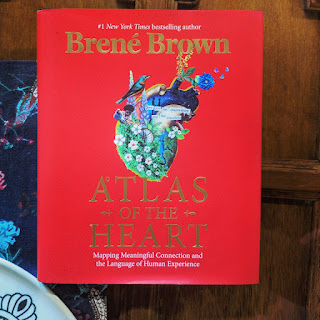
Review: Atlas of the Heart by Brené Brown


Rating: 4 Stars

Genre: Popular science, self-help

Themes: Emotions and how to use them to communicate

Ideal for fans of: Rhonda Byrne, Oprah

Get it in South Africa from: Penguin Random House South Africa

Atlas of the Heart is a compendium of 87 emotions and experiences – that means 87 different emotions and the thoughts that lead to them. They’re conveniently grouped by similarity of the feelings, and the responses they evoke.


Brené Brown is uniquely qualified to write about emotions – she’s had a lifelong interest in how these feelings effect our lives, and specially, how they change the way we communicate. Her interest eventually became a passion, and then a career. And it all started with some fascinating research on one of the world’s most complex emotions – shame. Despite this, Brown freely admits that she doesn’t have concrete answers to every question concerning emotions, but she does have a lot of data, and the help of fellow researchers.

Her conclusions are remarkable. Not only does she define every emotion and experience covered in this tome, but she gives the reader incredible information that leads to several “ah ha!” moments, starting from her assertion that a lot of what we think of as emotion is actually just cognitive responses – emotion is as much about thinking as it is a bout feeling.

But that’s not all.

Brown helps us distinguish between similar emotions (like envy and jealousy) because if you better understand what you’re feeling and why, you can talk about it, form meaningful connections, and learn from it. You can master your emotions.

This book is packed with astonishing insights, including how boredom is actually good for you, and that disappointment CAN be measured. But don’t feel overwhelmed – all the research and data is presented in easy to follow and easier to digest bite-sized chunks. Brown’s style is also refreshingly personal – she gives context to her research, but shares this with an honest how-to style, that feels more like you’re getting advice from a friend than getting cold hard science.

There’s more. You’ll also get three skillsets for using emotion to cultivate meaningful connection with other people – so you can take what you’ve learned, and actually apply it to make your life better. What more could you want?

Atlas of the Heart by Brené Brown is published by Penguin Random House

26 Jan 2022

Review: The Unravelling by Polly Crosby


Alternate name: The Women of Pearl Island

Rating: 5 Stars (Masterful)

Genre: Literary fiction with a dash of history

Themes: Grief, family, love

Ideal for fans of: Natasha Carthew, Megan Hunter, Sara Collins

Get it in South Africa from: Jonathan Ball Publishers


After her mother’s death, Tartelin feels unmoored. She thinks with longing of her mum’s stories of the sea, and longs for closure. When she spies an advert for a job posting on a remote island off the English coast, it immediately catches her eye. Marianne Stourbridge, a lepidopterist, seeks an assistant, and Tartelin is looking for a way to escape and heal. With this job, she can be near the ocean her mother loved so much. It seems like fate.

Yet when she arrives, Tartelin realizes nothing is as it seems. The strangely deserted isle holds more than just the ruins of buildings once washed away into the sea – it holds a mystery, and Marianne is at the very scarred heart of it.

But there’s a catch. Miss Stourbridge is no longer used to company, and keeps her assistant at arm’s length. Yet somehow, the two women eventually become close, sharing their time, their grief, and finally, uncovering the island’s history, and the secrets it has hidden beneath its bleak exterior.

The Unraveling is more than a satisfying tale with a dash of history and suspense. It is an investigation into the nature of loss, and how this shapes not just a person, but their past and future, too. The carefully woven subplots of evolution and rebirth remind us that family isn’t necessarily a blood bond, but a meeting of like-minded souls and a desire to be seen and see.

Tartelin and Marianne are united by grief and loss, yet separated by so much else, not least of which their ages. Despite this, Polly Crosby reminds us that love and acceptance have no boundaries, and any playing field can be levelled with enough trust.

The mysterious and frightening history of the island and its inhabitants also serve to highlight the dark side of humanity, a start contrast to the hopeful sweetness felt throughout the novel. Crosby shows that man can be both creator and destroyer, and all that separates the two is motivation. Crosby gives tangible weight to the power of things left unsaid, making this book as much a story of loss and longing as it is of hope and happiness.

The Unravelling is poetic and beautifully written, but it is also an addictive story. It’s the kind of literary fiction that has a refreshingly satisfying and undeniable pull, making it sure to appeal to any reader. This is top-shelf prose made accessible through a brilliant story, and the effect is nothing short of perfection.  

The Unravelling by Polly Crosby is published by HQ, an imprint of HarperCollins Publishers, and is available in South Africa from Jonathan Ball Publishers